




Craniosacral technique course
The fascia (that is, the connective tissue network that holds the body together) can be sensed and influenced at various levels of depth. The most subtle form of perception and intervention involves the craniosacral technique: a manual approach that differs from the common conception of massage and requires the practitioner to have deep trust in their own sensitivity.
For those of you who work with your hands every day and are looking for tools capable of taking your craft beyond superficial aesthetics, craniosacral therapy offers a possibility. A technique which, precisely because of its non-invasive nature, has no significant contraindications.
What is craniosacral therapy?
Craniosacral therapy is not a massage in the conventional sense. The therapist places their hands on specific areas of the body (the head, the sacrum, and certain key points along the spine) and remains attuned to the flow of cerebrospinal fluid, the fluid that circulates between the skull and the sacrum within the central nervous system.
This subtle, rhythmic movement is known as the craniosacral rhythm and is a physiological manifestation of the body. It exists regardless of who perceives it: the technique simply brings it into focus through the practitioner’s hands. It is in this sense that we speak of listening: a form of listening that becomes reading and allows one to clearly sense where the body is in balance and where, on the other hand, there is a blockage, tension, or an area requiring attention.
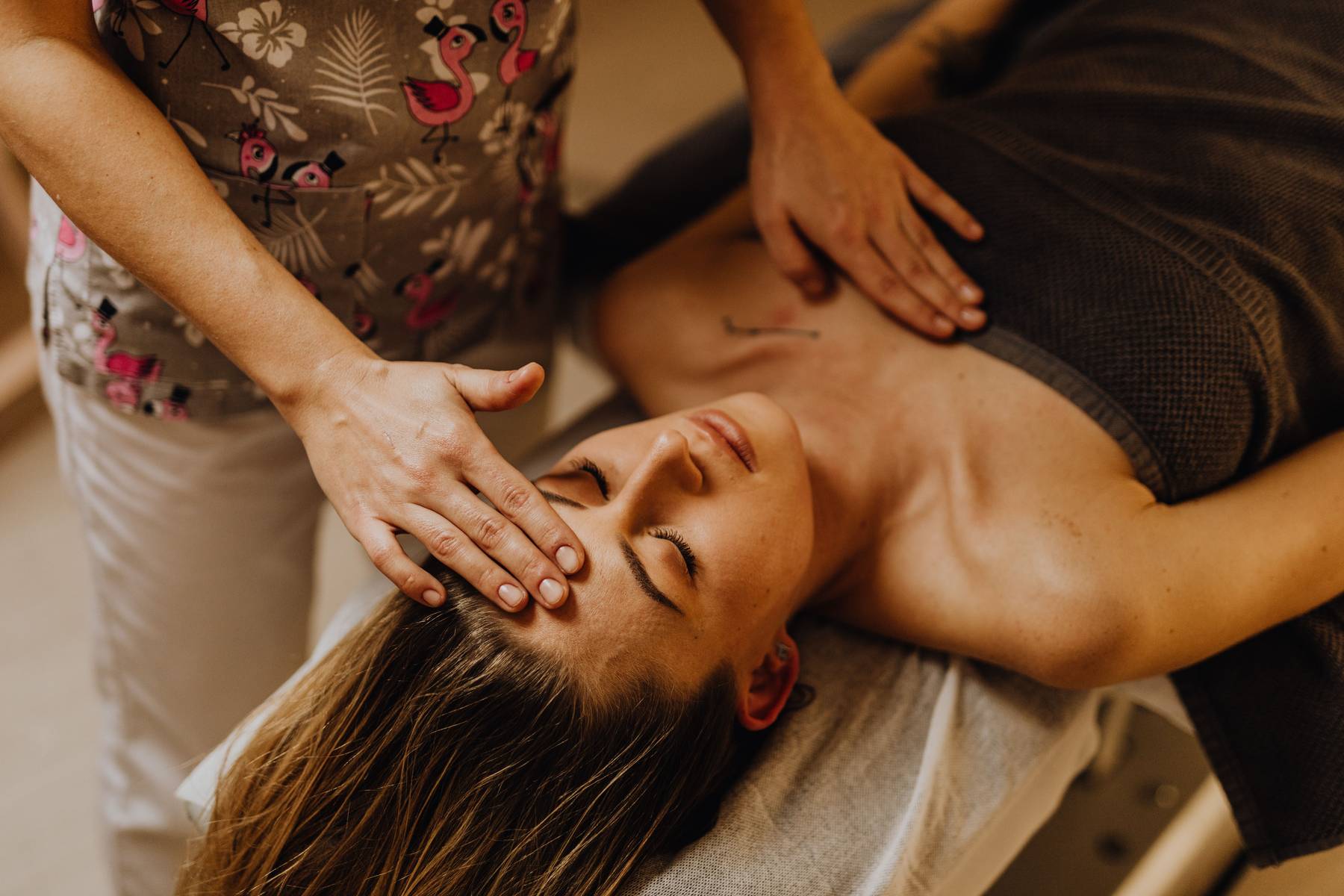
Unlike a traditional massage, this approach does not involve physically manipulating the person: instead, it creates a space for connection in which the body finds its own way back to balance.
How it works: sensing the rhythm through the hands
The craniosacral system comprises the bones of the skull, the sacrum, the meninges and the cerebrospinal fluid. It is a dynamic system, in constant motion, which has its own rhythm distinct from that of the heart and breathing. Training the hands to perceive this rhythm requires practice, consistency and expert guidance, but does not require prior medical training.
During the treatment, the relationship between practitioner and client shifts through touch. It is not you who ‘gives’ something: it is the client who takes from your hands what their body needs at that moment. This is the essential difference: craniosacral therapy works by activating the self-regulating capacity that every body possesses.
You will accompany the process: your hands become a tool for reading and, at the same time, a secure point of support. Everything else is done by the person’s body, according to its own timing and priorities.
The benefits for those receiving treatment
The benefits of craniosacral therapy manifest themselves on various levels and are rarely immediate. It is a process, not a one-off effect, and this is an important point to share with your clients right from the first session.
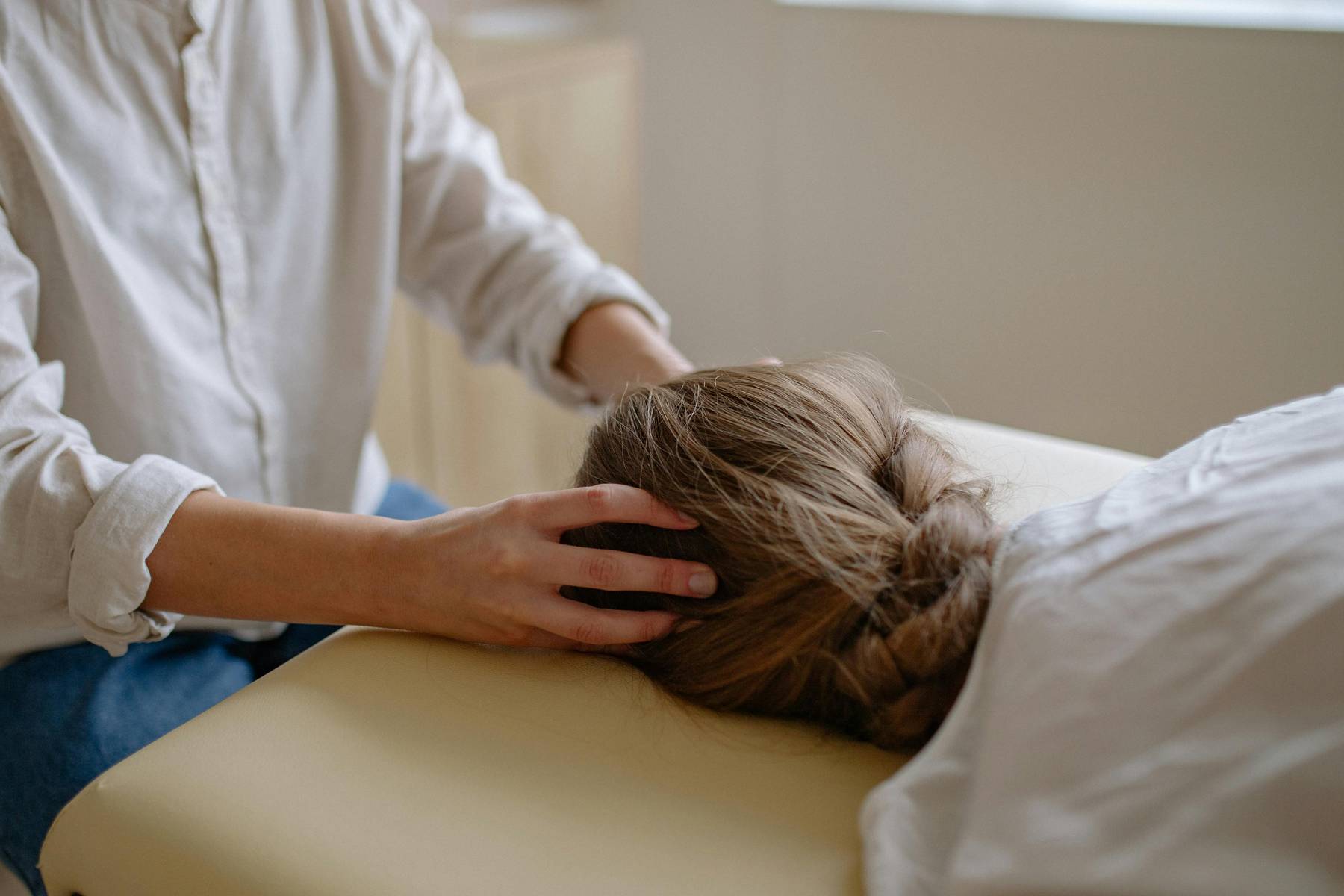
- On a physical level, craniosacral therapy is often associated with the release of deep-seated tension, particularly in the head, neck, shoulders and lower back. Clients report a feeling of lightness, improved sleep quality and deeper breathing.
- On a more emotional level, the technique promotes a state of deep relaxation that acts on the autonomic nervous system: the body shifts from a state of alertness to one of recovery, paving the way for a rebalancing that also addresses emotional tension. Many people describe the sessions as moments of inner stillness that are rare in everyday life.
We don’t promise instant results. We offer a method that requires time and consistency to work to its full potential.
An accessible technique with no significant contraindications
One of the features that makes the craniosacral technique particularly well-suited to your work is its accessibility. It does not require the use of products, equipment or complex positions. All you need are your hands, a comfortable position for the person being treated, and sufficient time – usually between forty minutes and an hour.
As for contraindications, the technique is considered very safe precisely because it is non-invasive. The few situations in which it should be avoided include recent head trauma, acute intracranial haemorrhage, aneurysms, recent skull fractures, changes in intracranial pressure, feverish conditions and neoplasms. In all these cases, referral to a doctor is mandatory.
Otherwise, the craniosacral technique can be offered in the treatment room to a very wide audience. It lends itself well to being integrated with other treatments in your daily practice, and is particularly appreciated by those seeking a more mindful, profound approach to wellbeing, one less focused on outward appearance.
The Craniosacral Technique: a journey through your manual sensitivity
The craniosacral technique we teach forms part of the Max Pier Method, our approach to beauty therapy as a form of listening and supporting well-being. Since 1980, we have been training beauty therapists using an integrated approach that combines psychosomatics, manual training and natural products: the three sides of the triangle that lies at the heart of our method.
The course guides you through the progressive learning of the technique: from perceiving rhythm to specific holds, from listening to key areas to conducting a full session. We work in small groups to ensure personalised attention and to allow each of you to refine the sensitivity of your hands.
This is a journey that broadens your approach to work and allows you to offer clients a different experience: deeper, more respectful of the body’s rhythms, and more aligned with a concept of ‘well-being’ that is our way of understanding the profession. For further information, please contact us: we will send you the details and the full course programme!
Frequently Asked Questions
Here are the most common questions we receive from our clients.
- What distinguishes craniosacral therapy from a traditional massage? The key difference lies in the way the hands are used. In a massage, the therapist works on the tissues using varying degrees of pressure. In craniosacral therapy, the hands rest gently and listen: they perceive the rhythm of the craniosacral system and support the body in its ability to self-regulate. It is the person receiving the treatment who guides the process through their body’s responses, not the practitioner.
- What is craniosacral therapy used for? Craniosacral therapy is used to promote a deep release of physical tension and to bring the nervous system into a state of recovery. The most common applications relate to tension in the head, neck and back, sleep quality and the management of daily stress. It does not replace medical treatment, but is integrated as part of a broader and more conscious approach to wellbeing.
- Do you need prior experience to learn the craniosacral technique? No. The craniosacral technique does not require any prior healthcare training or specific skills other than the manual dexterity you already use every day. What is needed is a willingness to listen, consistency in practice, and expert guidance. Our course is specifically designed to guide beauticians and wellness practitioners through this learning process, step by step, in small groups.
- Are there any contraindications for craniosacral therapy? The technique is considered very safe as it is non-invasive. The situations in which it should be avoided or practised only after medical assessment are limited: recent head injuries, active bleeding, and acute neurological conditions. For all other cases, the technique can be offered to a wide audience, including vulnerable individuals such as the elderly and pregnant women, with the necessary care and proper preparation.
- How long does a craniosacral session last? A session typically lasts between forty minutes and an hour. The duration depends on the person being treated, their responses, and the stage of the process. The first few sessions often require a few extra minutes to establish the necessary rapport and trust. Subsequent sessions may be shorter and more focused, tailored to the specific needs that emerge over time.
